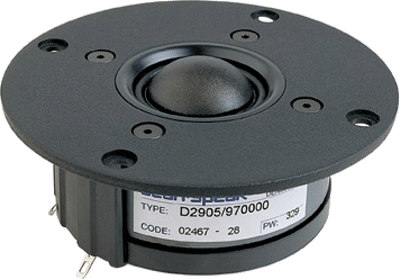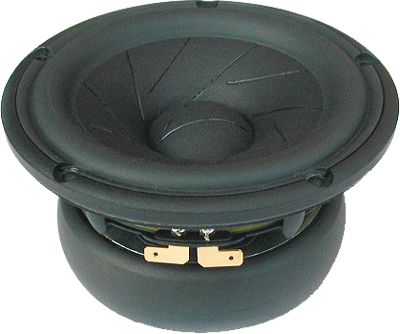
Scan-Speak
Scan-Speak has built drivers in Denmark since 1970 and remains the reference for high-end projects. Two families define.
Denmark
What separates one range from the next, how to choose an enclosure, and why the measurement is the only thing that settles it.
Riviera Acoustics collects technical notes on the drivers and crossover components used in amateur loudspeaker building. The hardware has moved on since the 2000s; the principles have not.
Almost every speaker that disappoints its builder failed at the same point: the parts were chosen before the plan. The order below runs the other way, and each step constrains the next.
The room, the distance, the level. Everything downstream is constrained by this and by nothing else.
Fs, Qts and Vas point to a loading. A driver that suits a sealed box rarely suits a sharply tuned reflex.
The enclosure follows the parameters, not a published plan drawn around different units.
Around measured behaviour. Impedance is not resistive and the acoustic slope is not the electrical one.
The only step that reports what the speaker does rather than what the design intended.
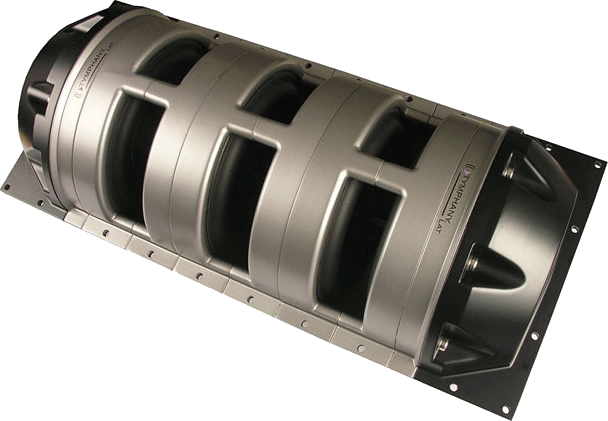
Scan-Speak, Peerless and Vifa cover most published projects. Morel, Tymphany and Tang Band answer more particular needs.
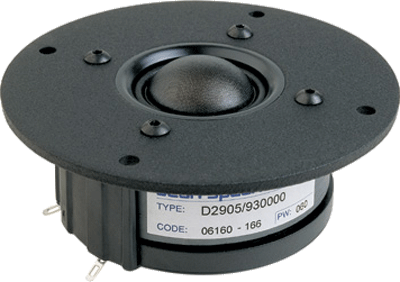
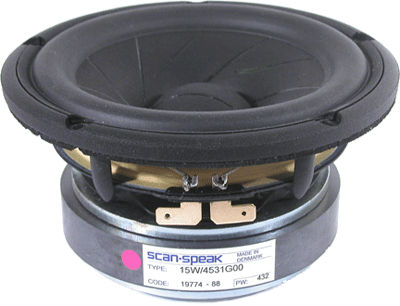
Scan-Speak has built drivers in Denmark since 1970 and remains the reference for high-end projects. Two families define.
Denmark
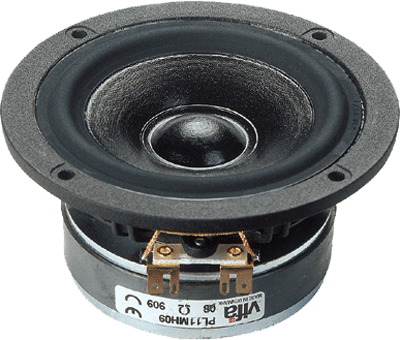
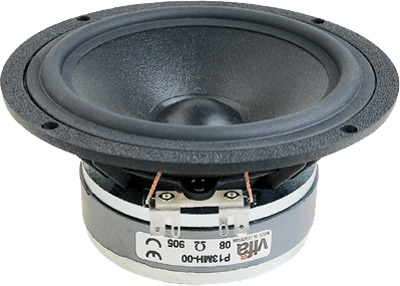
Vifa, renamed Peerless V-Line after the merger, sits in the middle of the market. The series differ mainly in cone.
Denmark
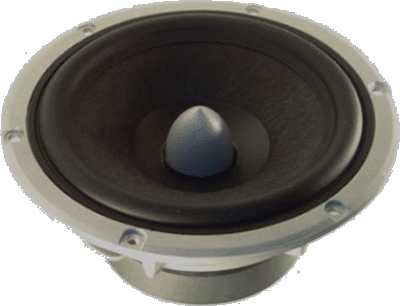
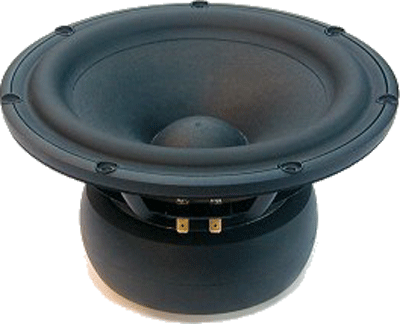
Peerless covers a wide range, from entry-level tweeters to long-throw subwoofers. The HDS family (High Definition.
Denmark
Three things carry most of the outcome, and the expensive one is not among them. Component quality matters once these are right, not before.
Sets what the bass can do. Get this pairing wrong and no component downstream recovers it.
Decides whether two drivers sum correctly through the region where both are working.
Braced or not, it decides how much energy returns as panel radiation a few milliseconds late.
Figures quoted are the ordinary working ranges of the category rather than specifications of particular units. Where a number depends on the driver in front of you, the page says to measure it.
Six manufacturers: cone material, motor design and the breakup behaviour that decides how steep the filter must be.
→Capacitors, inductors, resistors, ports and damping — where most of the recoverable mistakes live.
→The sequence from Thiele-Small parameters through loading and filter design to near-field measurement.
→